







The holidays are supposed to feel joyful, but for many people, holiday stress in 2025 is shaping up to be higher than ever. Recent surveys show that Americans are entering the season with more anxiety, more pressure, and less emotional bandwidth than in previous years. Understanding why stress is rising — and what you can do to protect your mental health — can make this season feel more manageable and meaningful.
Why Holiday Stress Is Increasing in 2025
Recent survey data highlight the most common sources of holiday stress, with financial pressure, family conflict, and social obligations leading the list.
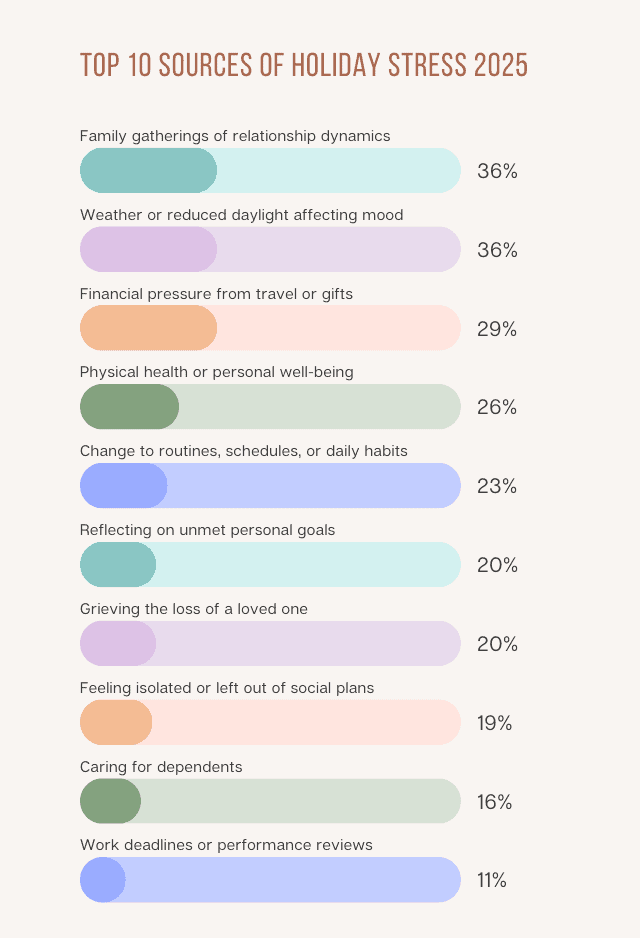
Based on findings from the Grow Therapy Holiday Stress Survey: >https://growtherapy.com/blog/holiday-stress-survey/
Emotional Pressure and “Performative Happiness”
A 2025 report from LifeStance Health found that many people feel pressured to appear cheerful even when they’re overwhelmed. This “performative happiness” creates emotional strain and makes it harder to acknowledge or address real stressors.
Economic Anxiety and Financial Strain
The American Psychiatric Association’s 2025 holiday poll revealed that 75% of Americans feel anxious about the economy, and many worry about affording gifts, travel, and gatherings. Financial pressure is one of the strongest predictors of holiday stress.
Loneliness and Social Disconnection
Despite the social nature of the holidays, loneliness is rising. LifeStance’s 2025 survey found that many adults feel isolated, even when surrounded by others. This disconnect can intensify feelings of sadness or anxiety during a season that emphasizes togetherness.
Family Tension and Difficult Dynamics
Grow Therapy’s 2025 Holiday Stress Survey reported that family conflict — especially around politics, expectations, or unresolved issues — is a major source of seasonal anxiety.
How Holiday Stress Affects Mental and Physical Health
When stress builds up, the body shifts into a heightened state of alertness. Cortisol rises, sleep becomes lighter or more fragmented, and emotional resilience drops. Over time, this can lead to irritability, fatigue, digestive issues, and difficulty concentrating, all of which make the holidays feel heavier.
The AmeriSpeak Seasonal Wellness Spotlight (2025) found that nearly 60% of Americans rely on family and friends to cope with stress, but many still feel emotionally drained by the end of the season.
Evidence‑Backed Ways to Protect Your Mental Health This Season
Set Boundaries Around Time and Energy
Research suggests that people who set clear limits around social commitments experience less emotional exhaustion. It is okay to decline invitations or shorten visits to protect your well‑being.
Create Digital Boundaries
The AmeriSpeak 2025 report highlighted digital overload as a growing contributor to holiday stress. Reducing screen time, especially doomscrolling, can improve mood and sleep quality.
Prioritize Rest and Recovery
Sleep disruption is common during the holidays. Keeping a consistent bedtime, limiting late‑night screens, and creating a calming wind‑down routine can help stabilize your nervous system.
Lean Into Supportive Relationships
Studies consistently show that meaningful connection is one of the strongest buffers against stress. Reach out to people who make you feel grounded, understood, and supported.
Acknowledge Your Feelings Instead of Masking Them
The 2025 LifeStance report emphasized that pretending to be happy increases emotional strain. Giving yourself permission to feel what you feel, without judgment, is a powerful form of self‑care.
When to Seek Additional Support
If holiday stress begins to affect your sleep, appetite, relationships, or ability to function day‑to‑day, it may be time to reach out to a mental health professional. Many providers offer virtual sessions during the holidays, making support more accessible than ever.
Holiday stress is rising in 2025 for many reasons — economic pressure, emotional expectations, loneliness, and family dynamics all play a role. But with awareness and intentional care, it is possible to move through the season with more steadiness and less overwhelm. Small, research‑backed shifts can make a meaningful difference in how you feel, connect, and recover.
 Share
Share Share
Share