







Stress is something most of us deal with on a daily basis.
People are more stressed these days for a bunch of reasons, and it’s a mix of societal, economic, and personal factors. From the cost of living skyrocketing, wages not keeping up, work and hustle culture, social media and comparison—everyone’s highlight reel makes people feel like they’re behind in life—plus a lack of work-life balance, it’s no surprise that stress is running rampant.
With April being Stress Awareness Month, we thought it the perfect time to share some stress relief ideas you can start using today and throughout the year. We could all use some more calm and inner peace.
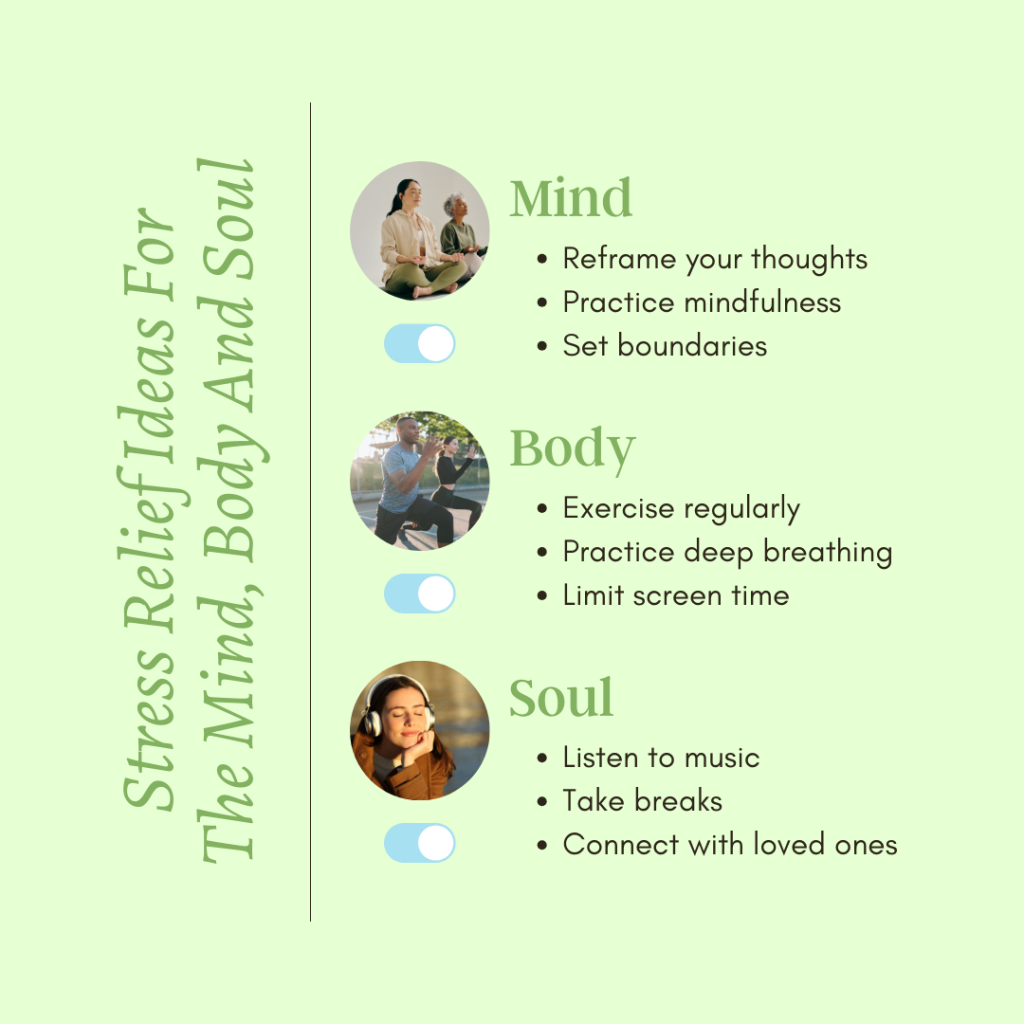
Stress Relief Ideas: Mind, Body, and Soul
Here’s a more detailed list:
1. Physical Strategies for Stress Relief
- Exercise regularly – Even a 10-minute walk can help lower stress hormones.
- Sleep well – Aim for 7–9 hours of quality sleep each night.
- Eat a balanced diet – Avoid excessive caffeine, sugar, and processed foods.
- Practice deep breathing – Try box breathing (inhale 4 sec, hold 4 sec, exhale 4 sec, hold 4 sec).
- Limit screen time – Especially social media and news that might trigger anxiety.
2. Mental & Emotional Strategies for Reducing Stress
- Reframe your thoughts – Instead of “I have to do this,” try “I get to do this.”
- Practice mindfulness – Meditation, gratitude journaling, or just being present helps.
- Set boundaries – Learn to say no to unnecessary commitments.
3. Lifestyle Changes to Relieve Stress
- Stay organized – A clutter-free environment reduces mental overload.
- Prioritize self-care – Take breaks, listen to music, read, or engage in hobbies.
- Connect with loved ones – Talking with friends or family helps reduce stress.
The Role of Magnesium in Stress Relief
And yet another stress-relief solution? Magnesium.
Yes! Magnesium plays a crucial role in reducing stress by supporting brain function, regulating neurotransmitters, and controlling the body’s stress response.*
Here’s how it helps:
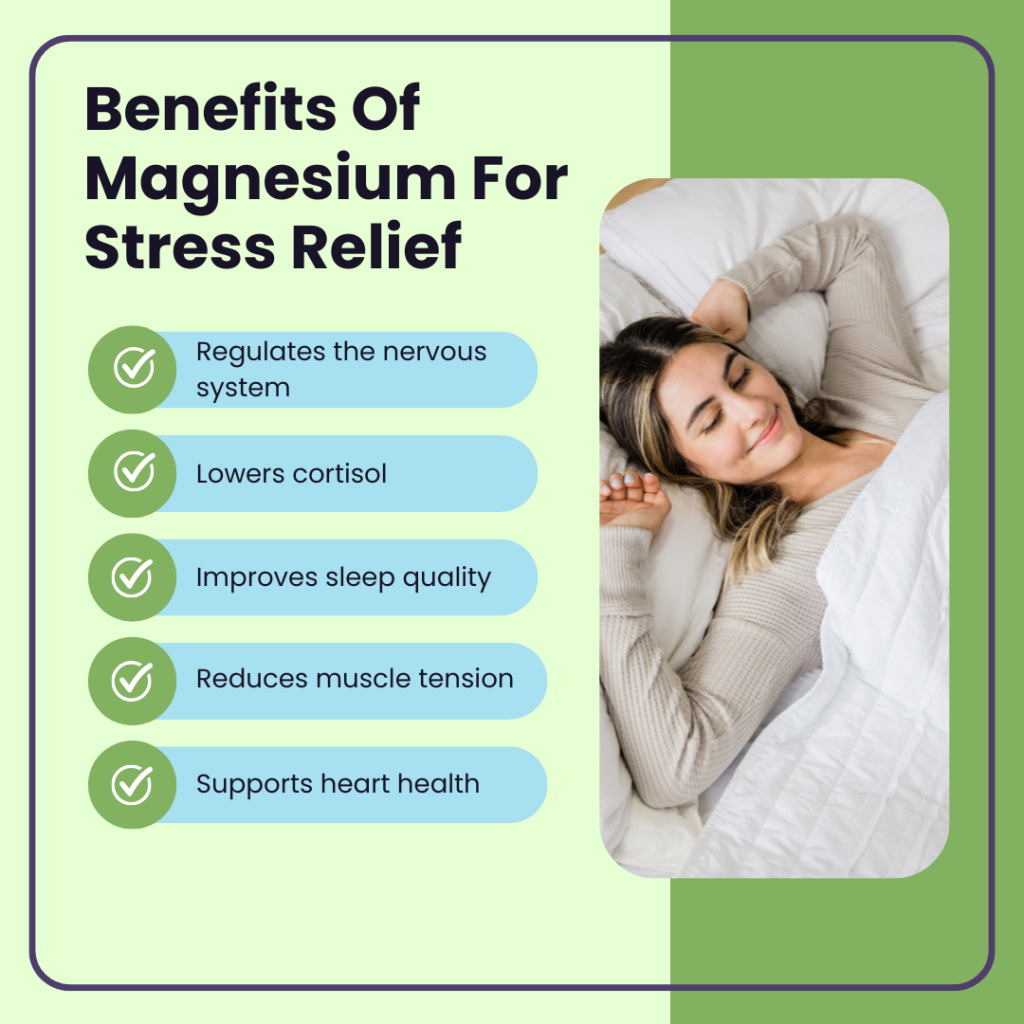
1. Regulates the Nervous System
Magnesium helps balance neurotransmitters like GABA (gamma-aminobutyric acid), which promotes relaxation and reduces anxiety. Low magnesium levels can lead to an overactive nervous system, making stress and anxiety worse.
2. Lowers Cortisol (Stress Hormone)
Magnesium helps regulate the body’s hypothalamic-pituitary-adrenal (HPA) axis, which controls cortisol production. Higher magnesium levels can help prevent excessive cortisol spikes, keeping stress levels in check.
3. Improves Sleep Quality
Since stress and poor sleep go hand in hand, magnesium’s ability to promote relaxation and improve deep sleep helps break the stress cycle.
4. Reduces Muscle Tension & Headaches
Magnesium acts as a natural muscle relaxant, which can help ease tension headaches, tight muscles, and physical symptoms of stress.
5. Supports Heart Health & Blood Pressure
Since stress can increase blood pressure, magnesium helps keep it stable by relaxing blood vessels and improving circulation.
Magnesium and Liver Health
But magnesium’s benefits don’t stop there!
Since we know that many of you prioritize liver health, we thought it would be valuable for you to also know that magnesium plays a key role in supporting liver health by helping with detoxification, reducing inflammation, and preventing liver-related issues.*
Magnesium has many liver health benefits.
Here’s how it helps your liver:
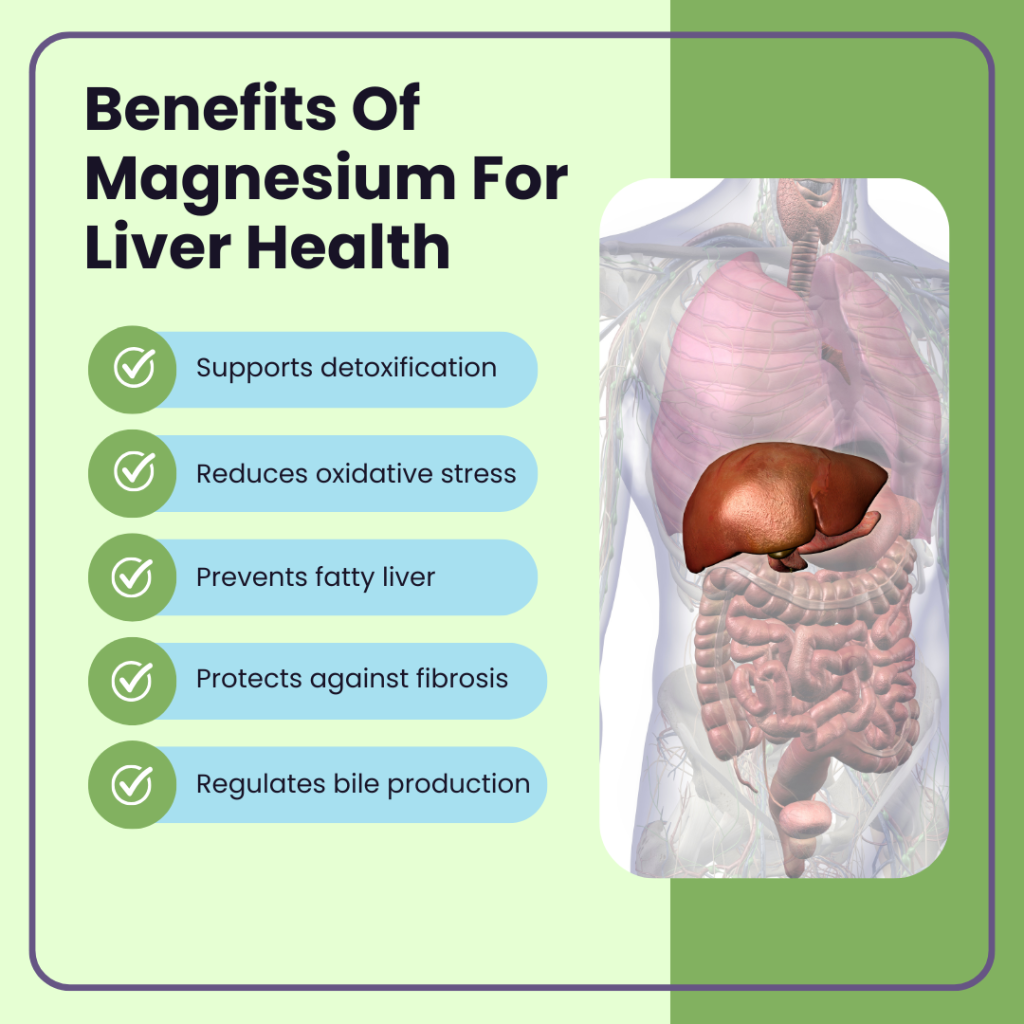
1. Supports Detoxification
- Magnesium is essential for activating enzymes that help the liver break down toxins, including heavy metals and alcohol.
- It helps with glutathione production, a powerful antioxidant that protects liver cells from damage.
2. Reduces Inflammation & Oxidative Stress
- Chronic liver inflammation (from fatty liver disease, alcohol, or poor diet) can lead to damage. Magnesium helps by:
- Lowering C-reactive protein (CRP), a marker of inflammation.
- Reducing oxidative stress, which contributes to liver cell damage.
3. Prevents Fatty Liver Disease
- Magnesium deficiency is linked to non-alcoholic fatty liver disease (NAFLD), where excess fat accumulates in liver cells.
- It helps regulate insulin sensitivity, reducing fat buildup in the liver.
4. Protects Against Liver Fibrosis & Cirrhosis
- Magnesium helps prevent excessive collagen buildup, which can lead to liver scarring (fibrosis) and cirrhosis.
- It may also help support overall liver cell health.
5. Regulates Bile Production
- Bile is essential for digestion and removing waste from the liver.
- Magnesium helps support healthy bile flow, which supports normal liver function.
Why Magnesium Glycinate?
Whether you’re looking to reduce stress or help support your liver—or both!—magnesium glycinate is often considered one of the best forms of magnesium. This is because it is highly bioavailable (well absorbed by the body) and gentle on the digestive system, making it less likely to cause digestive discomfort compared to some other forms.
Magnesium glycinate is also commonly used for relaxation and sleep support, as it helps regulate neurotransmitters involved in calming the nervous system. In addition, it supports muscle relaxation, heart health, and overall wellness, making it a well-rounded option for those looking to support both stress levels and long-term health.
 Share
Share Share
Share